
Ben-Hur is one of the great epics of cinema.
It blends spectacle, human drama, and spiritual questioning in a way that still feels powerful.
The 1959 film directed by William Wyler made a lasting mark on Hollywood and on audiences worldwide.
This post explores the movie’s story, production, themes, performances, and cultural legacy.
It does so in clear, accessible language and with helpful links where they add value.
The Origins of Ben-Hur
Ben-Hur began as a bestselling novel in the 19th century.
Lew Wallace wrote Ben-Hur: A Tale of the Christ in 1880.
The book combined historical detail with a spiritual storyline centered on the life of Christ.
It became one of the most popular novels of its era.
Because of its popularity, the story inspired stage productions and early silent films.
By the time Hollywood considered a new adaptation in the 1950s, the tale already had deep cultural roots.
William Wyler saw an opportunity to create a grand cinematic version that honored the book’s scale and moral questions.
MGM backed the project, hoping a spectacular film could revive the studio’s fortunes.
Plot Overview
Ben-Hur tells the story of Judah Ben-Hur, a Jewish nobleman in first-century Judea.
The film opens with friendship between Judah and Messala, a Roman officer.
Their friendship fractures when Messala returns from Rome loyal to the empire.
Political tension and personal pride lead Messala to betray Judah.
Judah is falsely accused of attempting to kill a Roman official.
He is enslaved and sentenced to row on a Roman galley.
Judah’s mother and sister are imprisoned and face suffering.
Judah survives years of hardship and becomes a skilled military man.
During a furious sea battle, he saves the life of a Roman commander.
That commander later adopts Judah as his son, granting him freedom and status.
Judah returns to Jerusalem to find his world changed.
He seeks revenge against Messala, which leads to the legendary chariot race.
As the story unfolds, Judah encounters the teachings and presence of Jesus.
This spiritual encounter shifts Judah’s priorities from vengeance to forgiveness.
By the end, redemption and faith become central to his life and to the film’s message.
Major Characters and Performances
Judah Ben-Hur
Charlton Heston plays Judah Ben-Hur with strength and quiet depth.
Heston’s performance anchors the film.
He conveys both the fury of betrayal and the slow movement toward mercy.
Heston became the face of the role for generations of viewers.
Messala
Stephen Boyd plays Messala, the ambitious Roman officer.
Messala’s arrogance and political zeal contrast with Judah’s moral struggle.
Their broken friendship forms the emotional core of the film’s conflict.
Supporting Figures
Jack Hawkins appears as Quintus Arrius, the Roman commander who changes Judah’s fate.
Hugh Griffith plays Sheik Ilderim, the chariot owner who helps Judah in the race.
These supporting roles add strong character presence and emotional weight.
Production Scale and Craft
Ben-Hur is famous for its scale.
MGM invested large sums, making it one of the most expensive films of its time.
Production built grand sets at Cinecittà Studios in Rome.
Costumes, props, and crowds were created to match the historical setting.
Filmmakers used thousands of extras to create convincing scenes of Roman life.
The production involved careful choreography of animal handlers, riders, and stuntpeople.
The film’s realism grew from practical effects and hands-on craftsmanship rather than digital tools.
Cinematographer Robert L. Surtees used expansive widescreen compositions to capture scale and intimacy.
Editor Ralph E. Winters worked to balance spectacle with emotional pacing.
Composer Miklós Rózsa wrote an orchestral score that underlines the film’s drama and spirituality.
These combined efforts delivered a cinematic experience of rare magnitude.
The Chariot Race: A Landmark Sequence
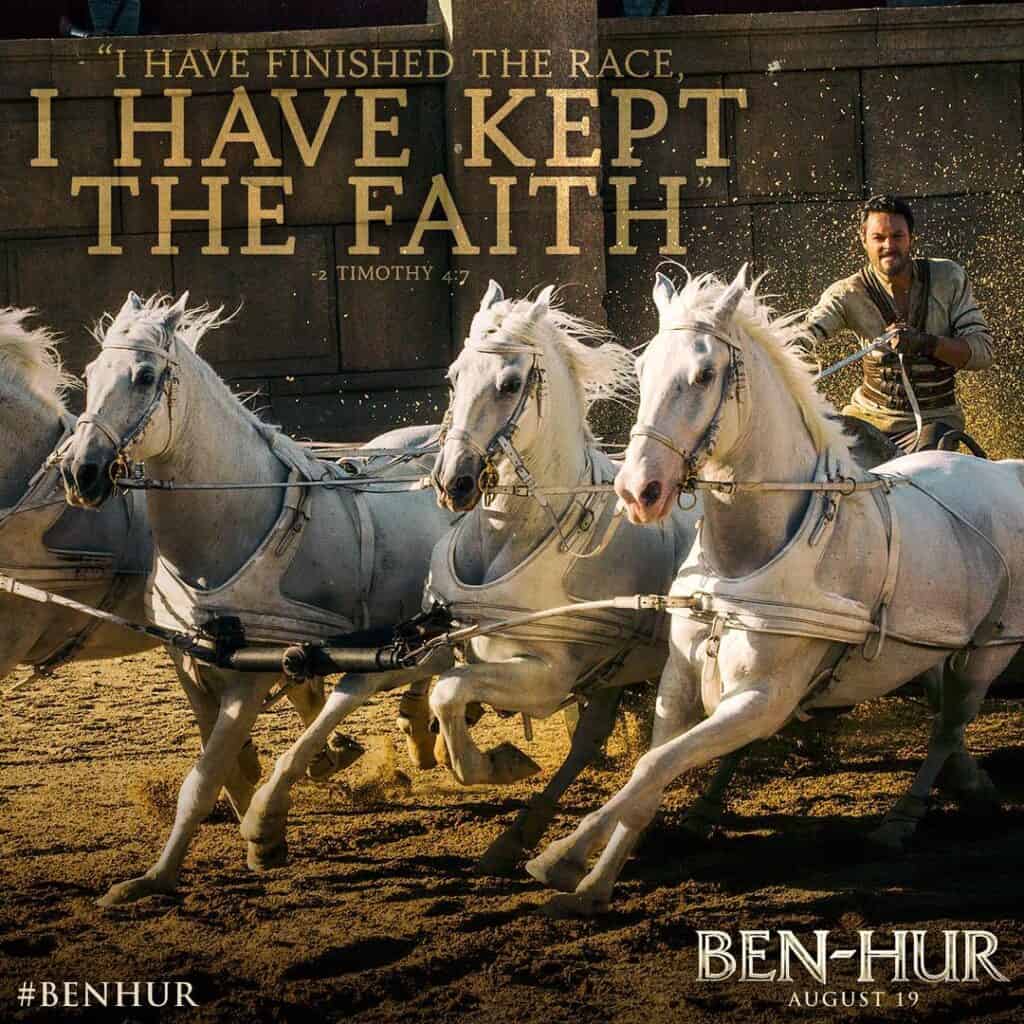
The chariot race is the single most famous scene in Ben-Hur.
Filmmakers built a massive arena inspired by the Circus Maximus.
The sequence took months to plan and shoot.
Actors and stunt performers trained intensely, and real horses pulled the chariots.
The camera work and editing create breathless momentum.
The race is a study in physical danger, dramatic tension, and cinematic rhythm.
It demonstrates how practical filmmaking can produce visceral thrills.
Even after decades, the chariot race remains a touchstone for action choreography and production design.
To experience the intensity, you can watch a clip of the chariot race on YouTube.
Themes: Revenge, Forgiveness, and Faith
Ben-Hur explores heavy moral ground.
Revenge stands as a driving motive for Judah early on.
The film shows how hate can consume a person’s life and decisions.
Yet Ben-Hur also studies the possibility of forgiveness.
Judah’s encounters with Jesus prompt a shift away from vengeance.
The story frames forgiveness not as weakness, but as liberation.
Faith plays an important role without turning the movie into a sermon.
Jesus’s presence is handled with restraint and reverence.
His influence emerges through acts of compassion rather than overt theological speeches.
That subtle approach allowed the film to connect with wide audiences.
Themes of justice, power, and human dignity also run through the film.
These themes help the movie resonate beyond its historical setting.
Cinematic Techniques and Style
William Wyler’s direction balances spectacle with character work.
He often used long takes and careful blocking to emphasize performance.
The widescreen CinemaScope format showed the grandeur of the sets.
Lighting and color helped define mood—warm tones for domestic scenes, cooler palettes for suffering.
Wyler’s style favored clarity of action and emotional truth.
The editing rhythm shifts between measured drama and rapid action, as in the chariot race.
Rózsa’s score supports the film’s arc, helping guide viewers emotionally.
Sound design emphasized natural elements: the creak of chariot wheels, the roar of the crowd, the slap of oars.
Together, these elements create an immersive experience that feels both epic and human.
Historical Accuracy and Artistic Choices
Ben-Hur is rooted in historical imagery but not strict history.
The film blends fact, legend, and the spiritual narrative from the novel.
Filmmakers aimed for plausible authenticity in costumes, architecture, and props.
However, the story prioritizes emotional and moral truth over documentary detail.
Some critics have debated historical liberties, but most agree the film captures the era’s spirit.
What matters for many viewers is the emotional honesty and moral clarity the film delivers.
Awards and Box Office
Ben-Hur was a critical and commercial triumph.
It won 11 Academy Awards, including Best Picture and Best Director.
This record tied later with Titanic and The Lord of the Rings: The Return of the King.
The film also became one of the highest-grossing films of its time.
Its success helped restore MGM’s financial stability and prestige.
Awards validated the studio’s gamble and reinforced the value of cinematic ambition.
Cultural Impact and Influence
Ben-Hur reshaped expectations for epic filmmaking.
Its production values became a benchmark for historical dramas.
Filmmakers studying spectacle and scale still reference Ben-Hur.
The movie’s influence appears in films like Gladiator and other large-scale historical pictures.
Its themes of forgiveness and human dignity continue to surface in cultural conversations.
The chariot race, in particular, entered popular imagination as an icon of cinematic excitement.
Remakes and Adaptations
Ben-Hur has inspired multiple adaptations over time.
Early silent film versions appeared in the 1900s and 1920s.
A 2016 remake attempted to introduce the story to modern audiences.
The remake featured updated effects and modern pacing.
Critics and audiences generally felt the 2016 version lacked the original’s emotional weight and scale.
The comparison highlights how production choices and directing sensibilities affect story impact.
Modern Viewing: Where to Watch
Ben-Hur remains available through many streaming and home video services.
Restored editions present improved picture and sound quality.
Watching a high-definition restoration helps modern viewers appreciate production detail.
Streaming platforms like Amazon Prime and Apple TV often list the film for rental or purchase.
You can also find physical Blu-ray editions that include behind-the-scenes features and interviews.
Why Ben-Hur Still Matters
Ben-Hur matters because it combines spectacle with soul.
The film proves that big-scale entertainment can also dig into moral questions.
It shows cinema’s capacity to move audiences through both action and quiet human moments.
For film students, Ben-Hur is a case study in production management, directing, and classical Hollywood storytelling.
For general audiences, it remains a stirring story of human fallibility and the possibility of grace.
Its lessons about pride, power, and compassion hold relevance in any era.
Criticisms and Reappraisals
No film is perfect, and Ben-Hur faces fair criticisms.
Some viewers find the pacing slow by modern standards.
Others question aspects of representation and the film’s imperial settings.
Modern critics sometimes analyze how the film reflects mid-20th-century American values.
Yet many reappraisals emphasize the film’s artistry, craftsmanship, and emotional power.
Contextual study helps viewers understand both the film’s strengths and its limitations.
Behind the Scenes: Remarkable Stories
The making of Ben-Hur generated many legendary anecdotes.
Cast and crew faced long shooting schedules and challenging stunts.
Stunt performers and animal handlers worked under intense conditions.
The chariot sequence alone tested logistics, safety, and endurance.
Stories of Heston’s dedication and Wyler’s meticulous standards abound.
These behind-the-scenes tales add human texture to the production’s grand scale.
Lessons for Filmmakers and Creators
Ben-Hur offers lessons for filmmakers today.
Ambition needs careful planning and committed collaborators.
Practical effects and craftsmanship can create enduring spectacle.
Balancing character depth with spectacle keeps audiences emotionally engaged.
Music, sound, and editing shape audience response as much as visuals do.
Finally, respecting the story’s moral core gives a production lasting resonance.
Final Thoughts
Ben-Hur stands as a towering achievement in film history.
It is a movie of great ambition and great heart.
The production’s scale serves story rather than overshadowing it.
Its themes of revenge, forgiveness, and spiritual awakening continue to speak to viewers.
Whether you watch for the chariot race, the performances, or the moral arc, Ben-Hur rewards attention.
It remains an essential work for anyone who loves epic cinema.
If you want a closer look at the film’s impact, consider watching documentaries or featurettes about its production on platforms like YouTube.
Also Read : Ryan Gosling