

William Holden remains one of classic Hollywood’s most watchable leading men.
He had the rare ability to look relaxed on screen while doing extremely precise work.
Even when he played confident characters, you could sense doubt and depth underneath.
That mix made him a perfect fit for the golden age of American cinema and for the more cynical stories that followed.
In this blog post, you’ll get a clear, entertaining look at William Holden’s life, career, and legacy.
You’ll also see why his best performances still feel modern to today’s viewers.
If you’re searching for William Holden movies, William Holden Oscar, or classic Hollywood actors, you’re in the right place.
A star built for the camera
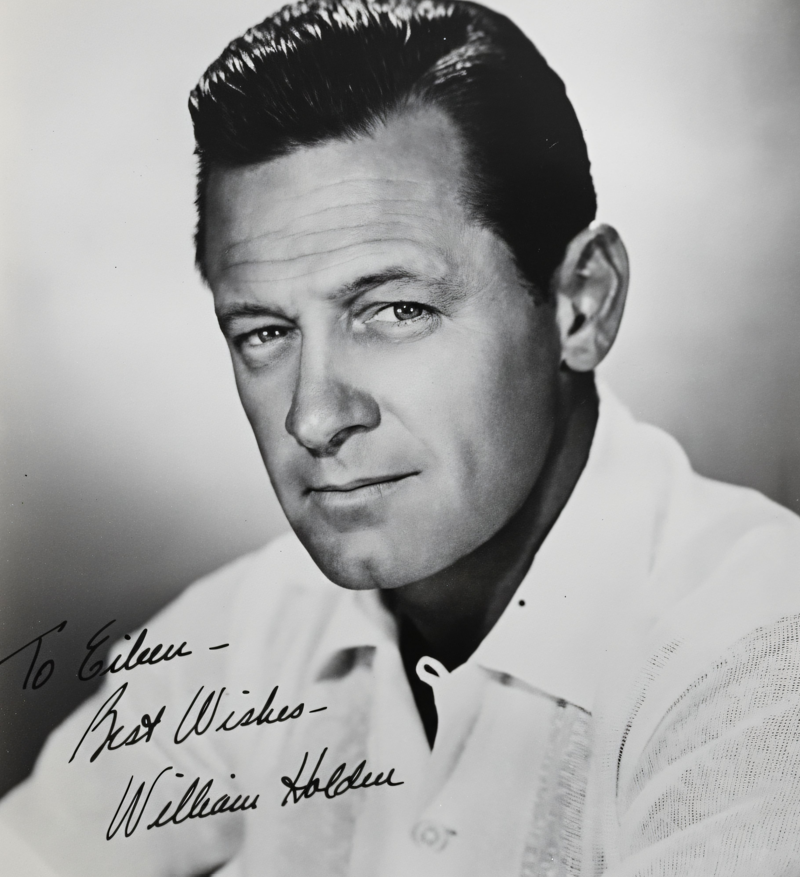
Holden had a face that cinematographers loved.
It was open, readable, and capable of shifting from charm to worry in a single beat.
That quality mattered in an era when close-ups carried entire scenes.
It also helped him bridge the gap between romantic leads and morally conflicted protagonists.
He wasn’t the flashiest actor of his time.
He didn’t rely on theatrical gestures or oversized emotion.
Instead, he used timing, stillness, and a kind of natural realism that audiences trusted.
That realism is one reason people still search for him alongside classic Hollywood icons.
Early life and the road to Hollywood
William Holden was born in 1918.
He grew up far from the glamour of film sets and studio premieres.
Like many actors of his generation, he arrived in Hollywood at a time when the studio system was powerful and highly controlling.
That system could make careers quickly, but it could also trap actors in roles that didn’t fit.
Holden’s early screen work showed promise, even when the material was routine.
Casting directors saw that he could deliver sincerity without melodrama.
That made him valuable in dramas, romances, and wartime stories.
It also set him up for the breakthrough that would turn him into a major star.
Breakthrough: “Golden Boy” and sudden attention
Holden’s career changed when he appeared in “Golden Boy.”
The film introduced him as a charismatic presence with genuine emotional weight.
He looked like a leading man, but he acted like someone you might actually know.
That balance was compelling to audiences and studios alike.
The attention he gained wasn’t just about looks.
It was about screen confidence.
Even when he was still learning, he projected steadiness.
In Hollywood, that steadiness often becomes stardom.
The war years and career momentum
Like many stars of his era, Holden’s life intersected with World War II.
The war reshaped Hollywood storytelling and public mood.
Audiences wanted honesty, courage, sacrifice, and sometimes escapism.
Holden fit these tones well because his performances could be both idealistic and grounded.
During these years, he built experience and range.
He learned how to carry a scene without forcing it.
He also learned how to play authority without arrogance.
Those skills later became essential in his most famous films.
Defining success: “Stalag 17” and the Oscar win
One of Holden’s most important career milestones was “Stalag 17.”
The movie gave him a role that required wit, toughness, and emotional ambiguity.
He played a man who survives partly through intelligence and partly through moral compromise.
That complexity helped the character feel real rather than heroic by default.
Holden won the Academy Award for Best Actor for “Stalag 17.”
That Oscar didn’t just reward a single performance.
It confirmed him as a serious talent and a bankable lead.
For readers tracking awards history, it’s worth exploring the broader context of the Academy Awards.
Hollywood’s sharpest mirror: “Sunset Boulevard”
If you watch only one William Holden film, many critics would tell you to start with “Sunset Boulevard.”
It remains one of the most influential films about fame, illusion, and the cost of ambition.
Holden plays Joe Gillis, a struggling writer pulled into a glamorous nightmare.
He’s cynical, but not heartless.
His performance works because he doesn’t ask you to like Joe.
He asks you to understand him.
That is a key difference, and it’s why the film still feels modern.
The movie also stands as a pillar of film noir, a genre Holden helped define through his detached, observant style.
“Sunset Boulevard” is also a story about storytelling.
It warns how easy it is to confuse attention with worth.
Holden’s calm delivery makes the warning land even harder.
He isn’t hysterical about the darkness he sees.
He’s used to it.
Romantic realism: “Sabrina” and chemistry that still sells
Holden also excelled in romance, especially when romance wasn’t idealized.
“Sabrina” showed a different side of him.
He could be charming without being soft.
He could be warm without becoming sentimental.
In many classic romances, the male lead is written as a fantasy.
Holden’s strength was making the fantasy feel plausible.
That’s why “Sabrina” remains a popular entry point for viewers discovering him today.
If you’re exploring mid-century film culture, browsing classic films history adds helpful context.
The 1950s: range, prestige, and controlled intensity
By the mid-1950s, Holden was a major figure in Hollywood.
He had prestige from awards and credibility from difficult roles.
He also had a growing ability to pick characters with sharp edges.
That period gave him films that were entertaining on the surface and critical underneath.
Holden’s style suited stories about compromise.
He often played men who understood the rules but didn’t respect them.
He played professionals who were competent, yet privately disappointed.
That’s a very adult kind of character, and he made it compelling.
“The Bridge on the River Kwai” and the art of survival
“The Bridge on the River Kwai” is another essential film in Holden’s career.
It’s a sweeping war epic, but it’s also a psychological study of pride and obsession.
Holden’s character brings a gritty practicality that contrasts with the film’s more rigid personalities.
He feels like the human reality inside a story that could otherwise become purely symbolic.
His performance is especially effective because it’s not flashy.
He reacts like someone who has seen too much and learned too many lessons the hard way.
That quiet realism anchors the film.
It also helps explain why Holden’s best work holds up across generations.
“Network” and the late-career reinvention
Many actors fade into nostalgia.
Holden didn’t.
He found one of his most memorable later roles in “Network.”
The film is a fierce satire about television, power, and moral erosion.
It still feels uncomfortably relevant.
Holden plays a character caught between ideals and appetite.
He’s not presented as a villain.
He’s presented as someone making choices that are easy in the moment and costly in the long run.
That theme fits Holden perfectly because his screen persona always carried consequences.
If you enjoy media criticism, “Network” is a must-watch.
It also connects Holden to modern conversations about attention economics and the pressure to perform.
For a quick overview of the film’s cultural footprint, you can explore Network (film).
What made William Holden different
Holden’s acting was built on controlled honesty.
He rarely pushed emotion at the audience.
He let the audience arrive at the emotion on their own.
That approach is common today, but it was distinctive in his era.
He also had a unique masculine energy.
He wasn’t trying to be perfect.
He was trying to be believable.
That believability created tension in roles where the character’s public face didn’t match private motives.
In practical SEO terms, this is why searches like William Holden acting style and William Holden best performances keep trending among classic film fans.
His work is a masterclass in subtle leading-man craft.
Personal life: charm, complexity, and cost
Holden’s off-screen life had glamour, but it also had strain.
Fame amplifies personality, temptation, and pressure.
The studio era could build a star’s image while leaving the person behind it exposed.
Holden lived in that contradiction for decades.
He had relationships that fascinated the public.
He also had personal struggles that complicated his later years.
It’s important to approach these topics with balance.
A great career can exist alongside real pain, and both can be true at once.
The Holden legacy in today’s viewing world
Modern audiences often discover Holden through streaming libraries, curated classic collections, and film-school recommendations.
What surprises many first-time viewers is how contemporary his performances feel.
He doesn’t “act old.”
He acts human.
His films also reward rewatching.
You notice different layers at different ages.
As a teenager, you might see the romance or suspense.
As an adult, you see the compromises, the quiet disappointments, and the moral bargains.
Holden’s legacy is also preserved by institutions and archives.
If you’re interested in film preservation and Hollywood history, the American Film Institute is a useful place to explore broader context.
Best William Holden movies to start with
If you want a simple viewing path, start here.
These titles showcase his range and why he remains a top classic Hollywood star.
1) Sunset Boulevard
It’s witty, bleak, and unforgettable.
Holden is the audience’s guide into a world that looks glamorous and feels poisonous.
2) Stalag 17
A smart performance with bite and ambiguity.
It shows why he won the Oscar and why the role still works.
3) Sabrina
A romantic classic that highlights his charm and ease.
It’s also a reminder that he could be light without becoming shallow.
4) The Bridge on the River Kwai
A major epic where Holden brings grounded realism.
His presence helps the story feel lived-in rather than staged.
5) Network
A late-career standout that feels eerily current.
Holden delivers maturity, regret, and desire without speeches or showboating.
Why he remains SEO-relevant and culturally relevant
People still search William Holden because he represents a specific kind of stardom.
He is the bridge between golden-age glamour and modern cynicism.
He could sell romance, but he could also critique the world romance lives in.
That duality keeps him interesting.
From an SEO perspective, his name is tied to enduring keywords.
Those include William Holden, Sunset Boulevard, Stalag 17, Sabrina, The Bridge on the River Kwai, and Network.
These films are continuously rediscovered, reviewed, and recommended.
As long as people keep revisiting classic cinema, Holden stays in the conversation.
Final thoughts
William Holden didn’t become a legend by being the loudest performer in the room.
He became one by being the most believable.
His best characters are not heroes or villains in simple terms.
They are people navigating systems that reward compromise and punish sincerity.
That theme is timeless.
So is Holden’s gift for making it entertaining to watch.
Also Read : Nikki Glaser