
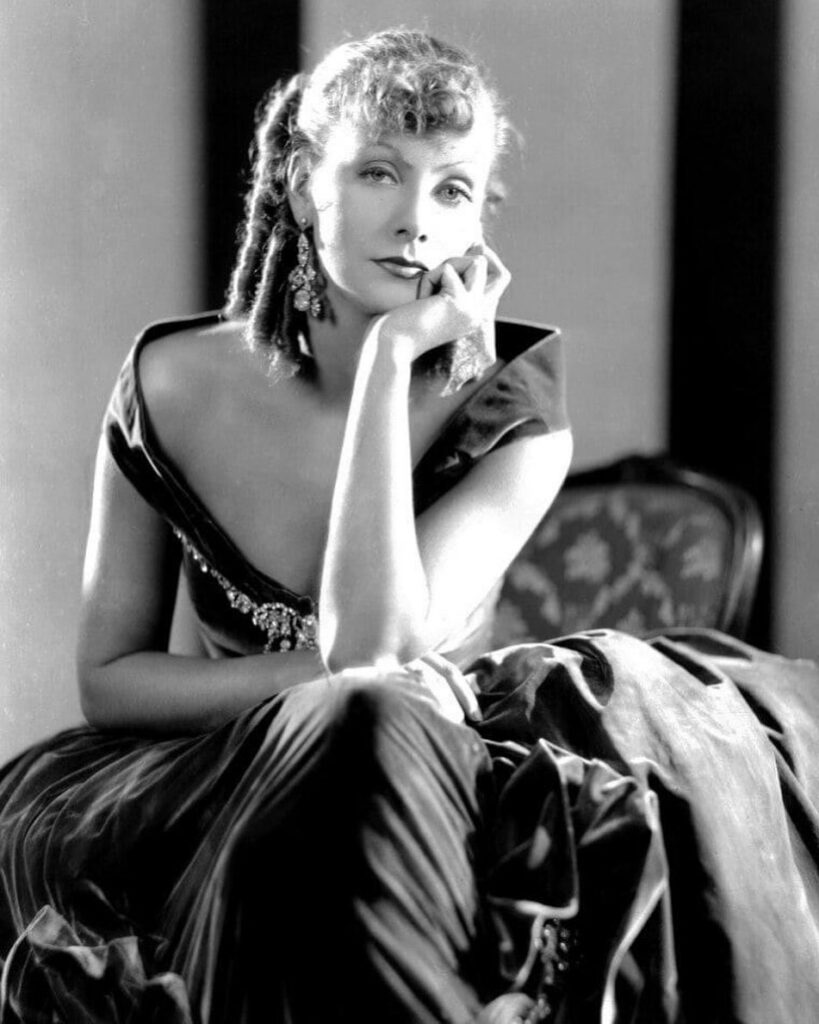
Greta Garbo remains one of the most fascinating names in classic Hollywood history.
She was not only a major film star.
She became a symbol of mystery, restraint, and screen power that still shapes celebrity culture today.
In an era when studios manufactured personalities as carefully as they produced movies, Garbo did something rare.
She pulled away.
She said less, appeared less, and somehow grew larger in the public imagination.
This long-form profile explores Greta Garbo’s life, career, craft, and cultural legacy in clear, easy English.
It aims to be both professional and enjoyable.
It also looks at why her legend still works so well in the modern world of constant exposure.
Who Was Greta Garbo?
Greta Garbo was a Swedish-born actress who became one of the biggest stars of American cinema.
She worked mainly during the silent film era and the early decades of sound film.
She is widely remembered for her intense screen presence, her naturalistic acting style, and her famously private off-screen life.
Her story is often told like a myth.
A young woman from Stockholm arrives in Hollywood.
She becomes a global icon.
Then she steps away and refuses to play the publicity game.
That mix of achievement and distance is the foundation of the “Garbo legend.”
It is also why she remains a top subject for fans of classic Hollywood and film historians.
Why Greta Garbo Still Matters
Garbo matters because she helped change what movie acting could look like.
She mattered because she proved that a star could build power through stillness, not noise.
She matters today because her approach feels like a direct counterpoint to modern celebrity culture.
Her influence appears in acting schools, fashion editorials, and modern filmmaking.
It also appears in the way audiences still crave “mystery” in public figures.
Early Life in Sweden
Greta Garbo was born Greta Lovisa Gustafsson in Stockholm, Sweden, in 1905.
Her childhood was modest.
Her family did not have wealth or high social status.
This background shaped her discipline and her inward nature.
It also shaped the way she approached fame later, with caution rather than hunger.
As a teenager, she worked to support herself.
She was connected to the world of advertising and retail before film fully entered her life.
From Ordinary Work to an Unusual Opportunity
Garbo’s earliest screen experiences were linked to commercial and promotional film work.
Those small roles helped her learn what the camera could do.
They also showed others that she had a distinct look and presence.
Soon, her path moved toward professional training and bigger ambitions.
She studied at the Royal Dramatic Training Academy in Stockholm.
That connection to formal performance education mattered.
It helped her build control and technique, not just “star quality.”
The Move to Hollywood and the Studio System
Hollywood in the 1920s was an efficient dream factory.
It was also a strict workplace built around contracts and image control.
Greta Garbo’s arrival in America placed her inside the studio system.
That system could elevate talent quickly.
It could also trap artists in rigid expectations.
Garbo was signed by MGM, one of the most powerful studios of the era.
MGM promoted glamour and polish.
Garbo, however, offered something different.
MGM’s “Garbo” as a Brand
Garbo’s name became a brand built on seriousness, elegance, and emotional depth.
The studio marketed her as exotic and refined.
The public responded strongly.
Yet even early on, she resisted excessive interviews and social exposure.
That resistance did not weaken her popularity.
It intensified it.
In modern SEO terms, her public identity became a rare kind of “value proposition.”
She offered scarcity.
She offered depth.
She offered the promise that there was always more you could not quite reach.
Silent Film Stardom: The Power of the Face
In silent cinema, the face had to do much of the work.
Garbo’s face was unusually cinematic.
It held emotion in a controlled way that drew viewers closer.
She became famous for a gaze that seemed both present and distant.
That balance worked perfectly for silent film storytelling, where emotion was often large and stylized.
Garbo’s emotion felt quieter and more real.
A Different Kind of Screen Acting
Many silent-era performances leaned theatrical.
Garbo leaned inward.
She used small changes in expression and posture to communicate complicated feeling.
This is one reason she remains important in film acting discussions.
If you study performance evolution from silent to sound, Garbo is a key figure.
Her work invites comparison with other defining stars of the time, including Charlie Chaplin and Buster Keaton, even though her screen persona was entirely different.
The Transition to Sound: A Career That Could Have Broken
When sound arrived, many silent stars struggled.
Some voices did not match their screen image.
Some acting styles felt outdated overnight.
Garbo survived the transition and remained a major draw.
That is not a small achievement.
It is one of the clearest markers of her talent and adaptability.
The studio leaned into the moment with the famous marketing line: “Garbo Talks.”
Audiences were curious.
The event-like quality of that transition increased her mystique even further.
Why Her Voice Worked
Garbo’s voice had a distinctive tone and rhythm.
It matched her controlled emotional style.
It also added texture to her screen identity rather than disrupting it.
In a sense, sound cinema gave her a new tool for intimacy.
The camera could come closer, and the voice could carry subtlety.
Garbo’s performances benefited from that shift.
Signature Films and Roles
Greta Garbo made a number of films that remain central to her legacy.
Some are remembered for romance.
Some are remembered for tragedy.
Some are remembered because she simply dominates the frame.
Rather than list titles without meaning, it helps to understand what her roles often share.
They frequently explore desire versus duty.
They often present a woman with an inner life larger than the world around her.
They often end with sacrifice, separation, or a kind of emotional exile.
The “Garbo Character” and Its Appeal
Garbo’s characters are often not “relatable” in a casual way.
They are intense.
They are sometimes severe.
They are often emotionally intelligent and painfully honest.
That may sound like a risky formula for mass entertainment.
It worked because Garbo made intensity look beautiful and human.
She could be grand without being fake.
These themes also make her films valuable for viewers who want more than simple romance.
They offer psychological drama.
They offer moral conflict.
They offer atmosphere.
If you enjoy exploring film history, pairing Garbo’s work with the broader timeline of pre-Code Hollywood can add context about shifting values and censorship.
The Mystery Persona: “Garbo Doesn’t Want to Be Seen”
Greta Garbo is often described as the star who wanted to be left alone.
That idea became part of her public myth.
It also became a central reason audiences could not stop talking about her.
Privacy, in her case, was not simply a preference.
It was a strategy for control.
It protected her personal life, yes.
It also protected her screen image from being “over-explained.”
The Marketing Paradox
Studios typically pushed actors to appear everywhere.
More interviews meant more familiarity.
More familiarity meant stronger box office, in theory.
Garbo disrupted that logic.
Her distance did not erase public interest.
It amplified it.
Today, celebrities sometimes try to “curate” mystery through social media breaks and rare interviews.
Garbo did it without a platform.
She did it through consistent refusal and careful boundaries.
This is why she is frequently mentioned in discussions about celebrity psychology and media culture.
Her approach remains one of the most extreme examples of controlled visibility.
Acting Style: Understatement That Hits Hard
Garbo’s acting is often described as natural and restrained.
That does not mean she was passive.
It means she chose precision over display.
She could express conflict with a slight shift of the eyes.
She could make silence feel like dialogue.
She could make stillness feel like tension.
Why Viewers Felt So Close to Her
The camera loved Garbo.
That statement is common in film writing, but it is also accurate in a technical sense.
Her face read clearly under the lighting of the period.
Her expression carried through the lens with depth rather than exaggeration.
This created intimacy.
It made viewers feel like they were watching private emotion, not a performance.
For anyone interested in the craft side, it is useful to explore how lighting and lens choices evolved in early Hollywood.
A starting point is the broader study of cinematography and how it shaped star images.
Fashion, Beauty, and the “Garbo Look”
Garbo’s influence extended beyond film.
She shaped ideas of beauty and fashion, especially the concept of androgynous elegance.
Her style was often clean and tailored.
She could look glamorous without looking decorative.
She could look powerful without looking aggressive.
Androgyny as Sophistication
Garbo’s image challenged narrow definitions of femininity.
She wore suits and structured silhouettes with confidence.
She made minimalism feel luxurious.
This is one reason fashion editors still reference her.
Her look fits modern aesthetics that value sharp lines, neutral palettes, and quiet authority.
If you want to explore the design language of her era, reading about Art Deco can help explain the cultural preference for sleekness and geometry that also touched film and fashion.
Public Life, Relationships, and Boundaries
Greta Garbo’s personal life has always been a subject of speculation.
That is partly because she did not confirm much publicly.
It is also because fame invites projection.
What is clear is that she valued independence.
She maintained close friendships and private relationships, but she avoided the standard Hollywood social circuit.
The Cost of Curiosity
The intense interest in Garbo’s private life tells us as much about the public as it does about her.
Audiences wanted access.
She offered art instead.
This tension is still alive today.
Modern audiences often say they respect privacy, yet they click on every rumor.
Garbo’s story is an early example of that contradiction.
It also shows the ethical problem of celebrity coverage.
A person can be famous without consenting to constant personal exposure.
Garbo insisted on that distinction long before it became a common conversation.
Retirement: Walking Away at the Peak of Legend
One of the most dramatic chapters of Garbo’s story is her early retirement from film.
She stepped away while she was still an icon.
She did not return for a comeback tour.
She did not try to reclaim the spotlight.
This choice is a major reason her reputation stayed strong.
Many stars fade slowly in public view.
Garbo froze her image in time.
Why Retirement Strengthened the Myth
When an artist disappears, the work becomes the main evidence.
The audience fills in the gaps.
The imagination works harder.
Garbo’s retirement turned her filmography into a closed set, like a perfectly finished book.
It also protected her from being dragged through changing trends that could have weakened her screen identity.
For modern readers, it is interesting to compare Garbo’s retirement to the broader history of Hollywood career arcs.
You can explore that bigger picture through topics like the Golden Age of Hollywood.
Cultural Legacy: What “The Garbo Effect” Really Means
Greta Garbo’s legacy is more than “a famous actress who was private.”
It is a model of how image, art, and absence can work together.
Her influence appears in several areas.
It appears in acting, where restraint is now widely valued on camera.
It appears in celebrity culture, where mystery is still profitable.
It appears in storytelling, where the “untouchable” figure remains compelling.
Garbo as an Idea, Not Just a Person
Many later stars borrowed elements of Garbo’s aura.
Some borrowed the distant elegance.
Some borrowed the controlled media access.
Some borrowed the seriousness.
But it is difficult to copy Garbo fully.
Her mystique worked because it seemed natural, not constructed.
It also worked because the studio era made distance possible in a way that modern media rarely allows.
That is why Garbo remains unique.
She belongs to a specific time, yet her appeal feels timeless.
Critical View: The Limits of the Legend
A balanced view should also admit that “mystery” can become a marketing tool.
Garbo’s privacy protected her, but it also fed public obsession.
Studios benefited from that obsession.
The audience participated in it.
There is also the reality that not every viewer connects with her style.
Some modern audiences prefer faster pacing and more direct dialogue.
Some find her films emotionally heavy.
These critiques do not weaken her importance.
They simply remind us that legends are built through taste, timing, and storytelling, not only through talent.
Watching Greta Garbo Today: How to Enjoy Her Films Now
Watching Garbo today can be surprisingly modern if you approach it correctly.
Think of her films as character studies rather than plot machines.
Pay attention to facial expression and pauses.
Notice how the camera frames her as both subject and mystery.
Tips for First-Time Viewers
Start with one film from her silent period and one from her sound period.
That comparison shows how adaptable she was.
It also shows how her presence stays strong even when the technology changes.
Watch in a calm setting with fewer distractions.
Her power often lives in subtleties that streaming-era multitasking can erase.
If you want background while watching, a general guide to film history can make the viewing experience richer without spoiling the emotional impact.
Conclusion: Why Greta Garbo Endures
Greta Garbo endures because she represents a rare combination.
She had technical skill and emotional intelligence.
She had star power without constant self-promotion.
She had visibility without accessibility.
She also made films that still communicate across time.
Her characters face choices that remain recognizable.
Her performances still feel intimate.
In a world where so much is shared instantly, Garbo’s controlled silence feels almost radical.
That is why her name still carries weight.
That is why “Greta Garbo” is not only a person from film history.
It is an enduring cultural idea.
Also Read : Marlon Brando