




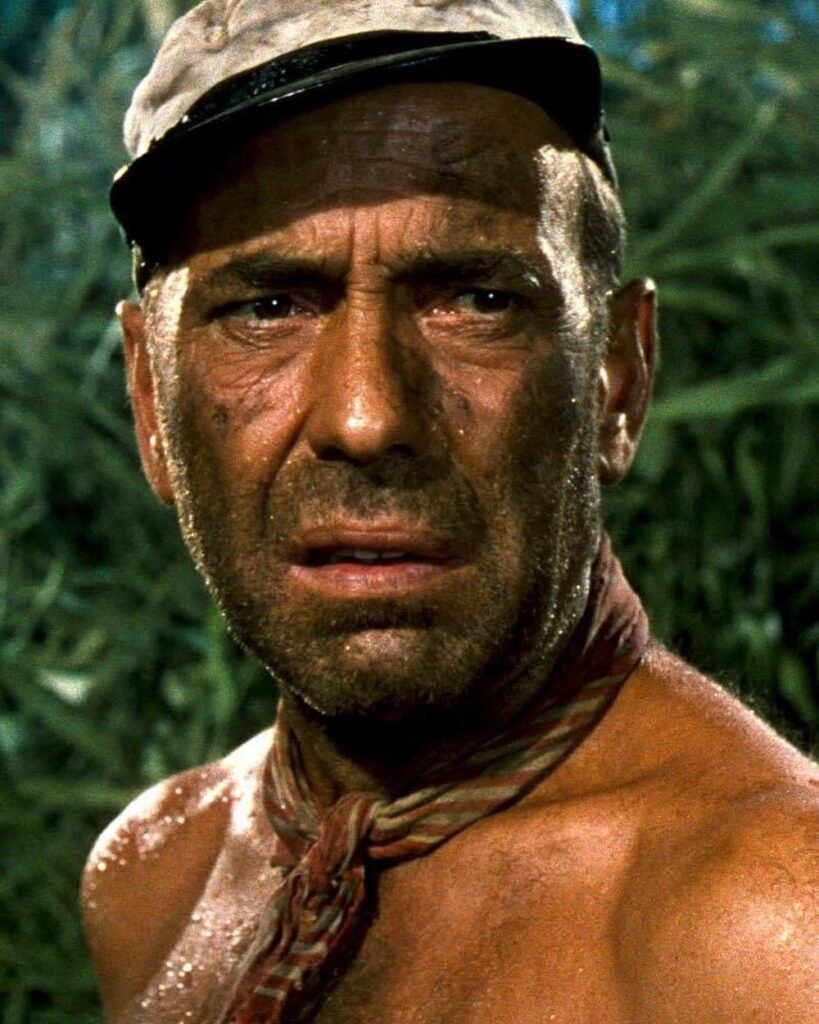
Humphrey Bogart remains one of the most recognizable faces in classic Hollywood history.
He is remembered for his sharp dialogue, guarded tenderness, and a screen presence that made silence feel like a speech.
In an era when studios manufactured personas, Bogart’s persona felt lived-in rather than designed.
He looked like a man who had seen enough to stop explaining himself.
This blog post explores Humphrey Bogart as an actor, a cultural symbol, and a lasting influence on film and popular style.
It also looks at the myths that grew around him, and why those myths still work in the age of streaming.
The Bogart Effect: Why He Still Matters
Humphrey Bogart is more than a famous name from black-and-white cinema.
He is a template for the modern antihero.
He plays men who are not trying to be liked, yet they become irresistible.
That contradiction is a major reason his films stay watchable even for new audiences.
Bogart’s characters often begin as emotionally sealed.
Then, almost against their will, they reveal a private code of honor.
That arc is common today in prestige television and modern thrillers.
It shows up in detectives, criminals with rules, and reluctant leaders.
When people talk about “cool” in an old-Hollywood sense, they usually mean Bogart.
It is a cool built from restraint, wit, and moral pressure.
For readers who want a quick filmography overview and dates, a helpful starting point is his profile on Wikipedia.
For official archival context and preservation work, you can also explore the Library of Congress resources on film history.
Early Life and the Road to Acting
Humphrey DeForest Bogart was born in New York City in 1899.
He grew up in a comfortable environment, with strong cultural influences around him.
His early path did not predict that he would become a defining movie star.
Like many actors of his generation, he moved through jobs, service, and stage work before finding the right screen identity.
Bogart worked in theater before Hollywood fully claimed him.
Stage acting taught him timing, presence, and how to hold attention without special effects.
Those skills later became central to his film style.
Even when a scene is quiet, you can feel him “playing” it.
If you are interested in broader context on the studio era and how stars were built, the Britannica website is a strong general resource.
It helps explain how the film industry shaped careers like Bogart’s.
Breaking Through in Hollywood
Bogart’s early film roles often cast him as a criminal or tough guy.
He had the look and voice for menace, and studios used that.
This period mattered because it formed his edge.
His later heroes still carry the memory of those darker roles.
He did not become a leading man by fitting into a clean romantic mold.
He became a leading man by redefining what romance and heroism could look like.
The turning point came when filmmakers realized his toughness had layers.
He could threaten, but he could also ache.
That combination became his brand.
It also became the emotional engine of many classic films.
The Signature Persona: Tough, Wary, and Surprisingly Tender
Bogart’s most famous characters often stand slightly apart from the world.
They watch before they commit.
He speaks like a man conserving energy.
Then he drops a line that lands like a punch.
His acting style is not flashy.
It is controlled, clipped, and full of implication.
This is why his performances age well.
Subtle acting tends to survive changing tastes better than loud acting.
Bogart also mastered the art of the pause.
He lets the audience lean in.
That technique is now standard in modern screen acting.
But in his time, it was part of what made him feel new.
If you want to explore how acting styles changed across decades, the American Film Institute offers accessible writing on classic cinema.
It is a useful place to connect Bogart to wider film history.
Casablanca: The Film That Became a Shared Language
No discussion of Humphrey Bogart is complete without Casablanca.
The film is not just a classic, but a global reference point.
Bogart’s Rick Blaine begins as a man who insists he cares about nothing.
Then the story slowly exposes the cost of that pose.
What makes Casablanca endure is how it mixes romance with politics and sacrifice.
It makes love feel personal, but also historical.
Bogart’s performance is key to that balance.
He never turns Rick into a soft romantic hero too early.
He keeps Rick guarded until the moment the mask becomes unbearable.
That timing makes the final choices feel earned.
The movie also helped define a certain kind of cinematic masculinity.
It is not about dominance, but about self-control under pressure.
If you want background on the film as a cultural artifact, the TCM site frequently covers classic Hollywood and major films.
It is a strong place for viewers who want context without academic overload.
The Maltese Falcon and the Birth of Film Noir Cool
The Maltese Falcon helped establish Bogart as a star with a new kind of authority.
Sam Spade is smart, skeptical, and morally complicated.
This is where Bogart’s image locks into place.
He becomes the man who can be tempted but not owned.
The film’s sharp dialogue and shadowy mood also shaped film noir.
Bogart became one of the faces people associate with noir style and cynicism.
What is important is that his cynicism never feels empty.
It feels like a defense mechanism.
That emotional realism is why the genre works.
Noir is not just shadows and cigarettes, but disappointment turned into posture.
For readers exploring noir as a concept, the BFI often publishes approachable film writing.
It can help connect Bogart’s work to broader movements in cinema.
The Bogart and Bacall Chemistry: A Modern Kind of Romance
Bogart’s partnership with Lauren Bacall created one of Hollywood’s iconic screen dynamics.
Their scenes feel like a duel disguised as flirting.
This was not the soft-focus romance of earlier decades.
It was witty, competitive, and sexually modern for its time.
Bacall’s presence also changed how Bogart read on screen.
He becomes more playful, more visibly alive.
Their relationship helped shape the public’s fascination with celebrity couples.
It also demonstrated how on-screen chemistry can become a marketing engine.
But the best part is that the chemistry is real in the performances.
It is not just gossip or studio promotion.
For quick exploration of Bacall’s career alongside Bogart’s, Wikipedia can serve as a basic hub.
For deeper classic film viewing guides, TCM is often more curated.
Key Themes in Bogart Films
The Reluctant Hero
Bogart rarely plays a hero who runs toward duty with a smile.
He plays a hero who argues with duty first.
That argument makes the eventual decision meaningful.
It shows the audience what the character is giving up.
This is a major reason his films feel emotionally adult.
They acknowledge that doing the right thing can be painful.
The Code of Honor
Many Bogart characters live by a private code.
They might break laws, but they do not break certain lines.
This creates moral tension without preaching.
The audience can sense values without hearing a sermon.
This code-of-honor structure is still used in crime films today.
It is also common in modern action franchises.
The Cost of Cool
Bogart’s coolness is not free.
It often hides sadness, regret, or fear of vulnerability.
That is why he feels human.
He is not invincible, just composed.
And when the composition cracks, it matters.
The audience feels the release.
Craft and Technique: Why His Acting Works
Bogart’s voice is a tool.
It is direct, unromantic, and unmistakable.
His face is also a tool.
He can show disdain, desire, and exhaustion with tiny shifts.
He often underplays big emotions.
This forces viewers to participate by reading between the lines.
That participation makes films more engaging.
It is a quiet form of suspense.
He also understood camera intimacy.
He does not perform “at” the audience.
He performs as if the audience is eavesdropping.
That approach is now a standard expectation in screen acting.
If you want to learn more about film preservation and performance history, the Academy Museum is a worthwhile place to explore.
It offers an accessible gateway into Hollywood craft.
Bogart’s Cultural Legacy
Humphrey Bogart became a symbol of classic Hollywood masculinity.
But it is a specific kind of masculinity.
It is not loud, flashy, or boastful.
It is weary, principled, and self-contained.
That is why his image still sells.
It fits posters, fashion, quotes, and endless tributes.
Bogart also shaped how we imagine detectives and loners.
Even people who have never watched his films recognize the outline.
His influence can be felt in neo-noir, crime dramas, and character-driven thrillers.
Directors and actors still borrow his rhythms.
The “Bogart type” is now a storytelling shortcut.
It signals competence, danger, and hidden decency.
Myth vs Reality: The Bogart Brand
Classic Hollywood built myths with precision.
Studios controlled publicity, images, and narratives.
Bogart’s myth is the independent tough guy who cannot be tamed.
That myth is partly true, and partly marketing.
The reality is more interesting than the slogan.
He was a working actor shaped by opportunities, contracts, and collaborators.
His greatness is not just personal charisma.
It is also the result of strong scripts, talented directors, and perfect casting moments.
Recognizing that does not weaken his legend.
It makes it more believable.
A star is rarely a solo creation.
Bogart’s films are proof that collaboration creates icons.
How to Watch Bogart Today Without Feeling “Old Movie Fatigue”
Some viewers worry classic films will feel slow.
Bogart is a good entry point because his movies move.
Start with Casablanca if you want romance, politics, and iconic dialogue.
Choose The Maltese Falcon if you want sharp mystery and noir attitude.
Try a Bogart-Bacall film if you want chemistry and playful danger.
Pick a darker noir if you want moral tension and shadowy atmosphere.
Watch with attention to his restraint.
The power is in what he does not say.
Also notice how modern many scenes feel.
The best classic films are not museum pieces.
They are living templates.
Bogart is one of the reasons.
Conclusion: Why Humphrey Bogart Still Feels Alive
Humphrey Bogart endures because he represents a rare mix.
He is hard without being hollow.
He is romantic without being sentimental.
He is heroic without being shiny.
His films offer entertainment, style, and emotional honesty.
They also offer a masterclass in screen presence.
In a world full of noise, Bogart’s quiet intensity still cuts through.
That is why his name remains a keyword in cinema history.
If you want one takeaway, it is this.
Bogart did not just play characters.
He played contradictions.
And audiences never get tired of contradictions done well.
Also Read : Ava Gardner