




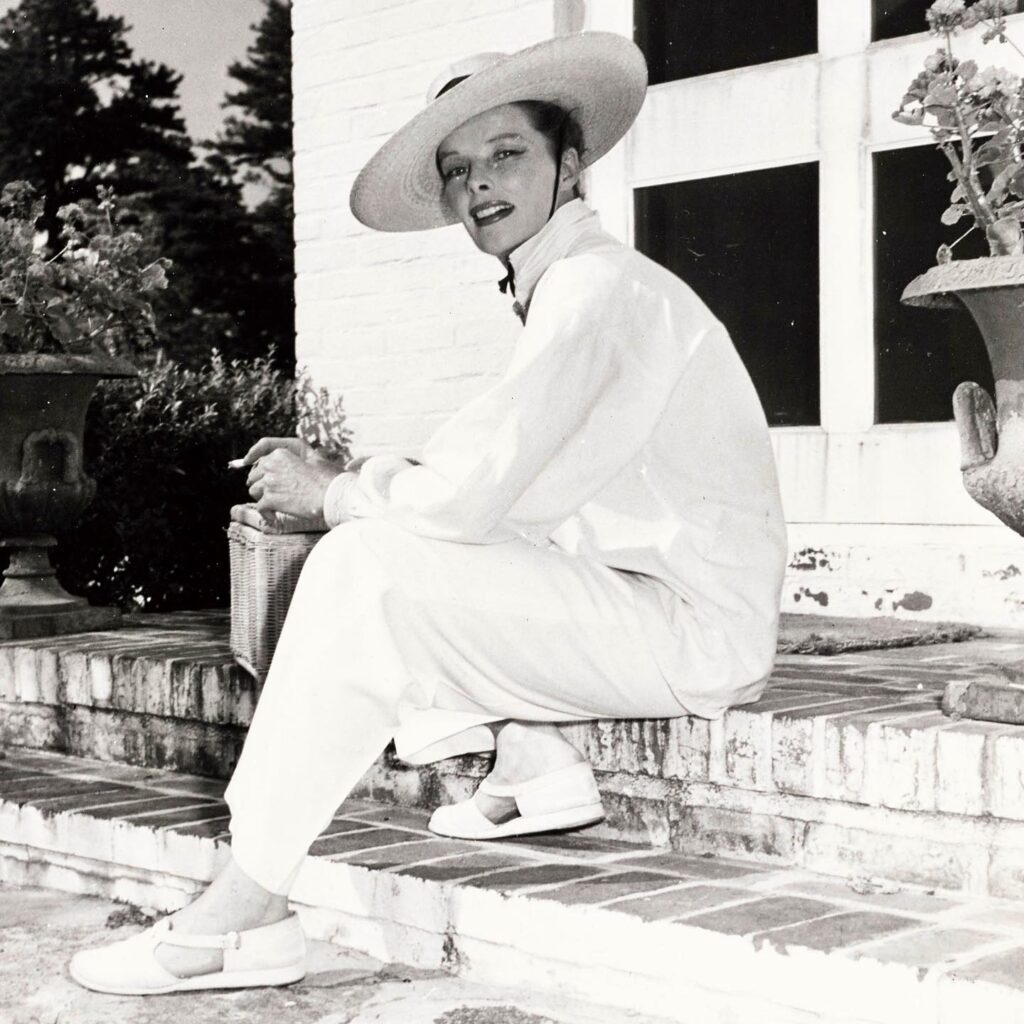
Katharine Hepburn remains one of the most influential names in classic Hollywood history.
She was not just a movie star, but a cultural force who reshaped what audiences expected from a leading woman.
Her career stretched across six decades, and her impact still shows up in modern film, fashion, and feminist conversations.
If you want to understand why people still call her timeless, you need to look at her work, her choices, and the fearless personality behind them.
This blog explores Katharine Hepburn in a professional but easy way, with critical insight and plenty of entertainment along the journey.
Why Katharine Hepburn Still Matters
Katharine Hepburn matters because she proved that independence could be as romantic as glamour.
In an era when studios tried to control every detail of an actor’s life, she insisted on being herself.
She became a symbol of confidence for audiences who were tired of predictable screen heroines.
Her influence is visible today in the way actresses negotiate power, demand better roles, and shape their public image.
If you enjoy stories of people who refuse to fit into a box, Hepburn is essential reading in motion-picture form.
Her legacy is also tied to the evolution of American cinema itself.
As Hollywood shifted from studio dominance to more actor-driven storytelling, Hepburn’s long career became a living timeline.
For a broader view of how the film industry evolved around icons like her, explore classic Hollywood.
Early Life and the Making of a Rebel
Katharine Houghton Hepburn was born into a family that valued education, debate, and bold opinions.
That background mattered because it taught her to question social rules rather than obey them.
While many stars were shaped mainly by studio training, Hepburn arrived with a strong identity already formed.
This is one reason she felt unusual from the beginning.
She did not present herself as delicate, and she did not try to sound smaller than she was.
She brought athletic energy and sharp intelligence to her presence.
Those traits later became part of her screen persona.
For readers who like details on her biography and timeline, you can start with Katharine Hepburn.
Breaking the “Perfect Lady” Image
Hepburn’s public image often challenged the soft, polished femininity expected in the 1930s.
She wore trousers when it was considered shocking for women to do so.
She spoke directly, and sometimes bluntly, in interviews.
That directness became part of her charm and part of her controversy.
Some people admired her honesty, while others thought she was too intense for a movie star.
The key point is that she did not apologize for being different.
In today’s terms, she built a personal brand before “branding” was a common strategy.
The Rise of a Star in Classic Hollywood
Hepburn’s early success showed that audiences were ready for something fresh.
She had the kind of screen presence that did not beg for approval.
Instead, she acted like someone who expected the room to pay attention.
That quality made her perfect for characters who were strong-willed, witty, and emotionally complicated.
Her early films helped establish her as a leading actress, not a decorative figure.
She became a star at a time when Hollywood often reduced women to narrow categories.
She pushed against that trend with every role that gave her agency.
“Box Office Poison” and the Comeback Story
One of the most dramatic parts of Hepburn’s career is that she was once labeled “box office poison.”
That label was a studio-era warning sign, meaning executives believed she could not sell tickets.
It was not just about film quality, but about public perception and publicity politics.
She responded in a way that now feels legendary.
Rather than shrinking, she took control.
Her comeback became a lesson in career reinvention long before that phrase became common.
This chapter of her life is often cited as proof that she understood the business side of Hollywood.
It also shows how quickly fame can turn, even for the most talented artists.
If you want context on the power structures actors faced, reading about the studio system helps.
Signature Style: Acting That Felt Like Thinking
Hepburn’s acting is often described as modern, even when you watch it today.
She delivered lines like she was discovering them in real time.
She moved like an athlete and listened like a stage performer.
Her characters frequently seemed to think on screen, which made them feel alive.
That effect is harder than it sounds.
Many actors can deliver dialogue smoothly, but fewer can make it feel spontaneous.
Hepburn did that with rhythm, timing, and sharp emotional turns.
Her voice and diction also became part of her identity.
Some critics found her delivery too clipped, while fans found it thrillingly intelligent.
Either way, it was unmistakably hers.
The Hepburn Persona: Independent but Not Cold
A common misunderstanding is that Hepburn’s strength made her distant.
In reality, her best performances reveal warmth under the confidence.
She often played women who fought hard for dignity but still longed for connection.
That mix created a special tension.
You could see her characters negotiating love without surrendering themselves.
That theme is one reason her films still resonate.
Modern audiences recognize the struggle of balancing ambition, romance, and self-respect.
The Spencer Tracy Partnership: Chemistry and Complexity
Katharine Hepburn’s partnership with Spencer Tracy is one of the most famous in film history.
Their on-screen chemistry felt natural and conversational.
They argued, teased, and challenged each other in ways that made romance feel like a battle of equals.
This dynamic was groundbreaking because it made love look like a meeting of minds, not just hearts.
Their films often explored gender roles through humor and conflict.
That approach made the stories entertaining while also socially relevant.
If you want a quick background on their working relationship, see Spencer Tracy.
Why Their Films Still Work Today
Many old movies feel dated because they rely on manners that no longer match modern life.
Hepburn and Tracy films often avoid that problem.
They are driven by personality and dialogue rather than trendy references.
The characters do not feel like museum pieces.
They feel like people you might still meet, just dressed differently.
That timeless quality is what keeps their work in circulation.
It is also why streaming audiences continue to discover them.
Defining Films and Career Highlights
Hepburn’s filmography is rich, and different viewers connect with different titles.
Some love her comedies, while others admire her dramatic performances.
Her range is part of the reason she is treated as a benchmark for acting excellence.
She did not rely on a single “type.”
She evolved across decades without losing her signature voice.
For a broader list of her work, explore her filmography.
Comedy That Felt Smart, Not Silly
Hepburn’s comedies often depend on wit rather than slapstick.
She could be funny without acting foolish.
That may sound simple, but it is rare.
Her humor usually came from confidence, timing, and social observation.
She played characters who were sharp enough to embarrass the men around them.
Yet she also made those characters human, not just “strong for the sake of strong.”
That balance is one reason her comedic roles remain satisfying.
Drama With Emotional Precision
When Hepburn turned to drama, she brought a kind of controlled intensity.
She did not melt down for easy sympathy.
She expressed pain through restraint, which can be even more powerful.
Her dramatic performances often feel like a study of pride, fear, and resilience.
That emotional precision helped her stand apart from peers who relied on grand gestures.
In many of her best scenes, you can see the character wrestling internally.
That is the kind of acting that earns respect across generations.
Awards, Records, and Critical Recognition
Hepburn is famously associated with record-breaking awards recognition.
Her achievements became part of her myth, but they were rooted in consistent excellence.
She earned honors because she kept delivering performances that felt essential to their films.
Even people who do not watch classic cinema often know her name because of her status in award history.
Awards are not the only measure of greatness, but they help show how widely her talent was acknowledged.
They also show her longevity.
Staying relevant in Hollywood is difficult, and staying respected is even harder.
Hepburn managed both.
Fashion, Public Image, and Cultural Impact
Hepburn’s style was not just clothing, but a statement.
She made trousers look elegant and natural on a woman at a time when it was controversial.
She helped normalize a more comfortable, practical form of femininity.
That choice seems obvious now, but it was bold then.
Her fashion was aligned with her personality.
She dressed like someone who needed freedom of movement.
That detail tells you a lot about how she saw herself.
Her public image also challenged expectations of celebrity behavior.
She did not perform sweetness to gain approval.
She performed competence.
That distinction matters.
If you are interested in how fashion and cinema shape each other, reading about Hollywood costume design adds useful context.
Feminism and the Hepburn Effect
Hepburn is often discussed in feminist film conversations, even when the term “feminist” was not widely used in her early era.
She did not always speak in political language.
She spoke through choices.
She chose roles that gave women intelligence, ambition, and agency.
She chose a lifestyle that did not depend on pleasing public expectations.
She also showed that a woman could be difficult, opinionated, and still beloved.
That “Hepburn effect” is one reason she is frequently referenced in discussions about women’s representation in media.
For a foundation on how cinema studies examines representation, explore feminist film theory.
Criticisms and Honest Perspective
A balanced look at Katharine Hepburn should include the fact that not everyone loved her style.
Some viewers found her mannerisms too sharp.
Some critics argued that she sometimes played variations of herself.
That criticism is not entirely unfair.
Hepburn had a strong persona, and it shaped many roles.
At the same time, that persona was part of her innovation.
She was not trying to vanish into characters the way some modern actors do.
She was creating a new kind of female lead, and that required consistency.
Another honest point is that her films, like many classics, reflect the limitations of their times.
Hollywood stories often centered on privileged worlds and narrow social perspectives.
Hepburn’s career existed within that system.
Yet within those constraints, she pushed boundaries in tone, gender roles, and character independence.
That is why critics still find her fascinating.
She represents both the brilliance and the blind spots of classic Hollywood.
Lessons Modern Creators Can Learn From Hepburn
Hepburn’s life offers practical lessons for actors, writers, and anyone building a career in public view.
She understood that talent is not enough without self-direction.
She showed that audiences respect authenticity even when it makes them uncomfortable.
She also proved that reinvention is possible without betrayal of identity.
If you are a creative person, her career suggests a powerful strategy.
Choose roles or projects that reinforce your values rather than chase every trend.
Develop a voice that is recognizable.
Then protect it, even when it costs you short-term popularity.
That approach is harder, but it can build a legacy.
A Viewing Guide for New Audiences
If you are new to Katharine Hepburn movies, it helps to start with what matches your taste.
If you like witty dialogue and battle-of-the-sexes energy, begin with her lighter films.
If you prefer emotional depth, explore her dramatic roles.
If you like cultural history, watch across decades to see how her performances evolve.
You do not have to “study” her to enjoy her.
Her films are entertaining on their own.
The deeper meanings appear naturally once you notice how unusual she was for her time.
For general background on her era, browse Golden Age of Hollywood.
Conclusion: The Power of Being Unapologetically Katharine Hepburn
Katharine Hepburn endures because she made strength look elegant and intelligence look cinematic.
She did not just play memorable characters.
She changed the rules of what a leading woman could be.
Her influence lives in modern performances that value confidence, complexity, and self-respect.
She remains a symbol of individuality in an industry built on conformity.
If you watch her work today, you are not only watching classic films.
You are watching a blueprint for fearless artistry.
Also Read : Mary Pickford